Showing posts with label nutrition. Show all posts

Monday, September 10, 2012

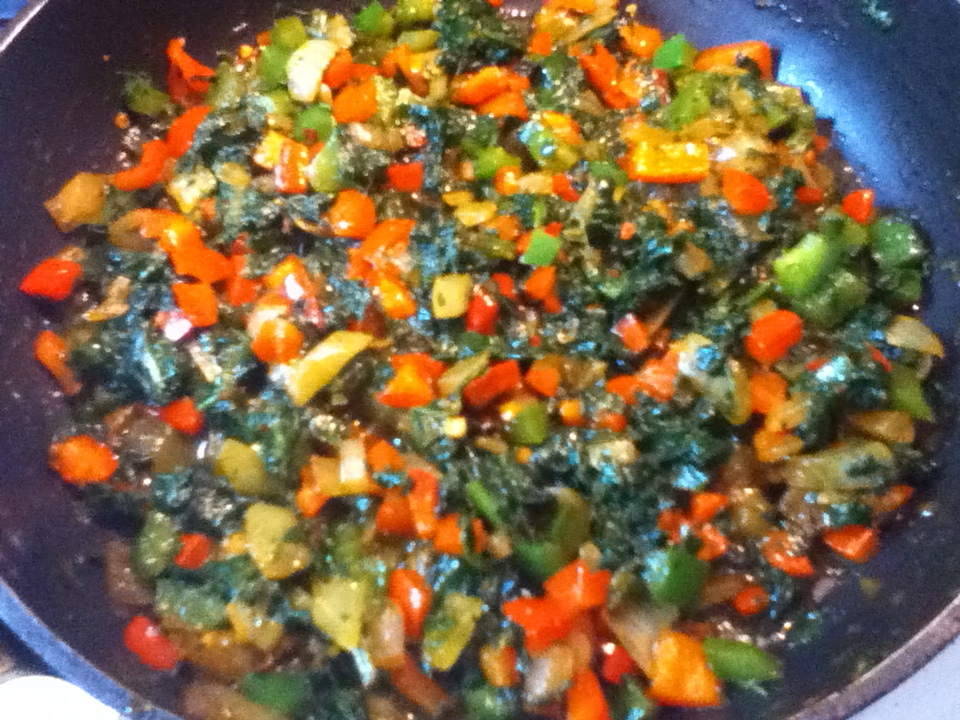
Recipe: Crustless Vegetarian Quiche

A few weekends ago, my sister in law and I got together and made our own version of a crustless quiche. We couldn’t be bothered to make a crust from scratch, so we decided to omit it all together! 


Nutrition Tip: This recipe includes 3 food groups from Canada’s Food Guide: vegetables, eggs (a meat alternative), and dairy (from the milk and cheese). 

The great thing about this recipe is that you can always experiment with different vegetables!


Crustless Vegetarian Quiche
Makes: 2 8inch quiches or 1 10inch quiche
One Serving: 1/4 of quiche
  • 1 medium onion
  • 1/4 cup thinly sliced onions
  • ½ cup diced green peppers 
  • ½ cup diced red peppers
  • ¼ cup green onions 
  • 2 tsp vegetable oil 
  • 1 cup grated cheese (mozzarella) 
  • 5 large eggs 
  • 2 cups skim milk
  • Salt to taste
  • Black Pepper to taste
  • Red Chilli Powder to taste (optional)
1. Heat up vegetable oil in a saucepan on medium heat. Add onions and lightly brown.
2. Add the remaining vegetables and add spices to taste. Cook 8-10 minutes or until vegetables are tender. Do not overcook! Once it is cooked, turn heat off and set aside.
3. In a large mixing bowl, add 5 eggs.
4. Whisk in milk and cheese.
5. Mix in cooked vegetables.
6. Pour batter into a greased pie pan. I did not have a deep pie pan, so I used two pie pans instead.
7. Bake at 350F for 40-45 minutes or until set. Remove and let cool slightly before slicing.

A New Look & A New Name!

Hello Everyone,

After another hiatus, I am back after some inspiration. It all started with this:


This is something I made with construction paper for a professional practice course about a year and a half ago. Students were asked to create a personal icon that represented themselves. I decided to make a cube with each side representing a certain aspect of my life. This is one of the sides of the cube that I found myself always drawn to, even a year and a half later. This image stands for what I believe in: Balance!

With this inspiration, I decided to revamp my blog, previously known as Nutritional Naz now known as B.A.L.AN.C.E! I hope to use this space to share ways to “be active” and “creatively eat”, both which can be incorporated into our daily “lives”!

I would also like to express my eternal gratitude to Kiswah Kreative for transforming my construction paper idea to an amazing logo! Click here to check out the Facebook page or here for your marketing needs.

I look forward to this journey and hope you will join me!


Tuesday, December 27, 2011

New Year's Resolutions

It’s amazing how time flies. We’re almost at a new year once again. You know what that means, time to make resolutions! Ah, the infamous resolutions that seem impossible to keep once January comes to an end.
Now don’t get me wrong, creating personal resolutions is great, but how effective are they really? We often create resolutions that sound great but are too daunting.
Here is how to achieve your goals and maintain them throughout the year!
Let’s use the classic example of losing weight.
"I want to lose 10lbs!"
Fabulous!
Now what?

Well, if I leave it at that, I will probably hit the gym for a couple of weeks or go on an unrealistic diet.  What is the likelihood that you will achieve your goals?  How many people do you know that lost weight and kept it off by eating meal replacement bars for the rest of their lives? Most likely, none!

With that said, I urge you to not create personal resolutions surrounding weight. Weight is just a number on the scale at the end of the day and may not be an accurate description of your health.

Let’s try another approach. A resolution that is more specific and doable. Start off by thinking about what affects how your body feels and looks.

This year, I suggest that you create a resolution around improving your physical activity or eating habits.

Physical Activity 
There may be many obstacles that prevent you from being physically active.  Here are a few tips to help you incorporate more physical activity into your daily life this coming year:
1      Barriers: Make a list of obstacles you face that prevented you from being physically active this year. 
     
     Opportunities: For each obstacle, think of what can be done to overcome this. 
    
     Resources: Consider how much money you are willing to spend to be physically active.  This can range from working out at home to working out with a personal trainer.

     Time: Think about how much time you can spend being physically active each day. Be realistic. Start with 10 minute bouts of exercise and work your way up from there.

     Daily life: Think about how you can be physically active without being at the gym. Taking the stairs and walking the dog are great examples of incorporating physical activity into you daily life. 

     Motivation: Make a list of types of physical activity you would like to engage in and find a friend with similar interests.
      These are a few things that I considered when I decided to become more physically active and it has definitely helped. 

Food
Food is a central part of our lives and carries several meanings for us all. Rather than restricting ourselves from eating, how about focusing on what we can eat! Here are some examples of making small changes to your diet without feeling like you have to eat flavourless food to be healthy.

1. Opt for skim milk and low fat cheese to cut down the fat and incorporate more dairy in your diet.
2. Aim to eat at least 5 servings of fruits and vegetables a day. By increasing your fruits and vegetables in your diet, you are automatically decreasing potentially high fat foods.
3. Make it whole grain! Switch your breads and pasta to whole grain. If you love your white bread, try "Smart" pastas and breads that are white but have added fibre.
4. Drink plenty of water throughout the day.

Try focusing on one of these tips and continue to add others to transform your diet. Who said resolutions can’t be made throughout the year?

Hopefully this helps you all in creating realistic, doable resolutions.
Happy New Year!

Sunday, September 25, 2011

Nutrition: A "New" Year

Can you believe September's almost over? I've been meaning to post this article for the beginning of the month but I was swamped with adjusting to a new schedule.  For me, a new school year is just as important as a new year; it's a time for me to set goals and resolutions!

As a new school year begins, we all start to adjust to new schedules academically and socially. It takes a few weeks or even a month to get used to a certain routine. In that time, we sometimes neglect our eating habits. We suddenly have hectic schedules with no time to eat healthy. This year, I encourage all of you to incorporate healthy eating into your daily lives as you begin to adapt to a new schedule. Here are a few tips I plan to follow:


Eat breakfast. Breakfast is a very important meal as it is our “starting” fuel. Wake up 10-15 minutes earlier if you feel like you don’t have enough time in the morning. Try to eat a breakfast that consists of as many of the food groups as possible. (Reminder: the four food groups are vegetables and fruits, grain products, milk and alternatives, and meat and alternatives).

Plan your meals. Take the time out once a week to plan what you’re going to make for your meals. This way, you can do your grocery in advance and ensure that you are getting lots of variety. Hopefully this will also help you make healthier meals and make you more self conscious of what you’re eating on a day-to-day basis.

Pack a lunch. If you take the time out to pack your own lunch you’re more likely to eat healthy and save money at the same time! A lot of the time we try to find the best deal, which may not be the healthiest choice.

Snack throughout the day. If you’re like me, you’re at school from 9am-6pm which means one lunch isn’t enough! Pack healthy snacks such as nuts, fruits, vegetables, or low fat yogurt. This will keep you energized throughout the day.

Bring your water bottle to school. Even if you are buying lunch, try drinking water instead of juice or pop. You will definitely cut down on the sugar and stay hydrated. (Tip for students at Ryerson: there’s a station to fill your water bottles in the Student Campus Centre courtesy of the RSU!)
I hope we all try to incorporate at least one of these tips into our daily routines and aim to live a healthier life in these next eight months!

Friday, May 7, 2010

Nutrition: Prebiotics, Probiotics & Synbiotics

We see all sorts of commercials talking about prebiotics and probiotics (mostly advertised with yogurt), but what exactly are they? In simplest terms, they are bacteria.

The basic function is to create a normal microbial balance in our gut and stimulate our immune system.  When our microbial balance is disturbed it may contribute to complications such as lactose intolerance, inflammatory bowel disease, food hypersensitivites, allergies, traveller's diarrhea, and foodborne pathogen infections to name a few.

Let's definine prebiotics, probiotics, and synbiotics and understand their differences:

Prebiotic: "a non-digestible and non-living food ingredient that selectively stimulates the growth/activity of one or more colon bacteria (the good ones!) and improves health." Prebiotics can be classified as fibre because they are not digested or degraded/ damaged in the intestinal tract and is a cheaper alternative to probiotics. 

Probiotic: "a live microbial feed supplement that is beneficial to health." Probiotics can be found in powder form, pills, yogurt, and other fermented foods. Probiotics are susceptible to being broken down by gastric acid and bile. 

Synbiotic: "a combination of prebiotics and probiotics (ie. a beneficial bacteria with its preferred substrate for growth)." This type is advantageous because the presence of a prebiotic improves the viability of the probiotic.

When we talk about bacteria, we're talking about bacteria that have beneficial health effects such as lactobacilli and bifidiobacteria.

So next time your at the grocery store, stock up on that yogurt.  It's a great snack on its own or as a dip, or a great dessert (as an alternative to ice cream!)

---------------------------------------------------------
Today's Food Item: Yogurt (1-2% MF, plain)
Food Group: Milk and Alternatives
Serving Size: 1/2 cup
Calories: 150
Fat: 8g
Fibre: 1g
Walking: 38 min
Swimming or Jumping Rope: 17 min
Cycling: 22 min

Sunday, January 24, 2010

Nutrition: Fibre

Fibre is an important part of our diets but isn't considered a nutrient.  This is because fibre is composed of long chains of glucose molecules that contain bonds that are not digested by humans.  We do not produce enzymes capable of breaking these special bonds called "beta bonds."
There are two types of fibre:
1. Soluble (viscous) dietary fibre - In the intestinal tract, soluble fibre dissolves in water and forms a gel  that slows the passage of food.  Therefore the food stays in our stomaches longer, which gives us the feeling of being full.   This also allows more time for nutrients to be in contact with the intestinal tract, which increases nutrient absorption.  Soluble fibre MAY also lower blood cholesterol levels.  This is how:
- soluble fibre increases excretion of bile and bile is made from cholesterol
- our body needs bile so it uses cholesterol to make more bile, thereby decreasing blood cholesterol levels
Sources - fruits, some legumes, oats, rye, and barley

2. Insoluble (non-viscous) dietary fibre - This type of fibre passes through fibre faster, which in turn slows glucose absorption. 
Sources - vegetables, wheat, and cereals

Where can we find fibre?
Fibre is found in most fruits, vegetables, legumes, and grains.  You can always read the nutrition facts table to see how much fibre you are getting per serving.

How much fibre do we need?
Men: 19-50 yrs - 38 g/day
        51+ yrs - 30 g/day

Women: 19-50 yrs - 25 g/day
              51+ yrs - 21 g/day

Remember to add more fibre slowly to your diet and drink lots of water!

----------------------------------------------------------------------------
Today's Food Item: Bran Muffin
Food Group: Grain Products
Serving Size: 1 medium (113g)
Calories: 355
Fat: 11g
Fibre: 9g
Walking: 89 min
Swimming or Jumping Rope: 39 min
Cycling: 51 min

Sunday, January 10, 2010

Nutrition: Complex Carbohydrates

Happy New Year to all of you! Hope you all are staying true to your resolutions, I sure am trying my best with mine.

Let's get started:

Complex carbohydrates are made up of many sugar molecules joined together.  Complex carbohydrates are also known as polysaccharides or oligosaccharides. (depending on how many sugar molecules are joined together)

The three types of complex carbohydrates are starch, glycogen, and dextrin.

Starch is a plant's storage form of carbohydrates.  Two types of starch are amylose and amylopectin, which are produced in different proportions.  There are many types of amylose and amylopectin which have different characteristics such as flavour, solubility, and the tendency to thicken a substance.

Glycogen is humans' and animals' storage form of carbohydrates.  Our bodies contain approximately 500g of glycogen.  A fifth of this is stored in the liver and the rest is stored within our muscles.  When our body needs glucose the glycogen in our liver is broken down to glucose and then released into the blood.

Dextrin is formed when starch is digested with acid or heat.  For example, when we toast bread in the toaster, we create dextrin.  Dextrin is sweeter than starch so bread tastes slightly sweeter when toasted.

Fibre can also be categorized as a complex carbohydrate, but since it doesn't get digested within our bodies, I'll be talking about fibre as it's own category.

Keep commenting so I know you're reading!

--------------------------------------------------------------------------------------
Today's Food Item: Whole Wheat Bread
Food Group: Grain Products
Serving Size: 1 slice (35g)
Calories: 85
Fat: 1g
Fibre: 2g
Walking: 21 min
Swimming or Jumping rope: 10 min
Cycling: 12 min

Monday, August 31, 2009

Introduction

I'm a first year student in a Canadian University and I am majoring in Nutrition and Food.  Whenever I tell people this they are often very curious and want to know a few health tips.  For this reason, I have decided to create a blog and share with you what I learn at school.  To me, nutrition is so much more than dieting, in fact it's a lifestyle.

Hope you find my blog of interest, stay tuned for my next post!